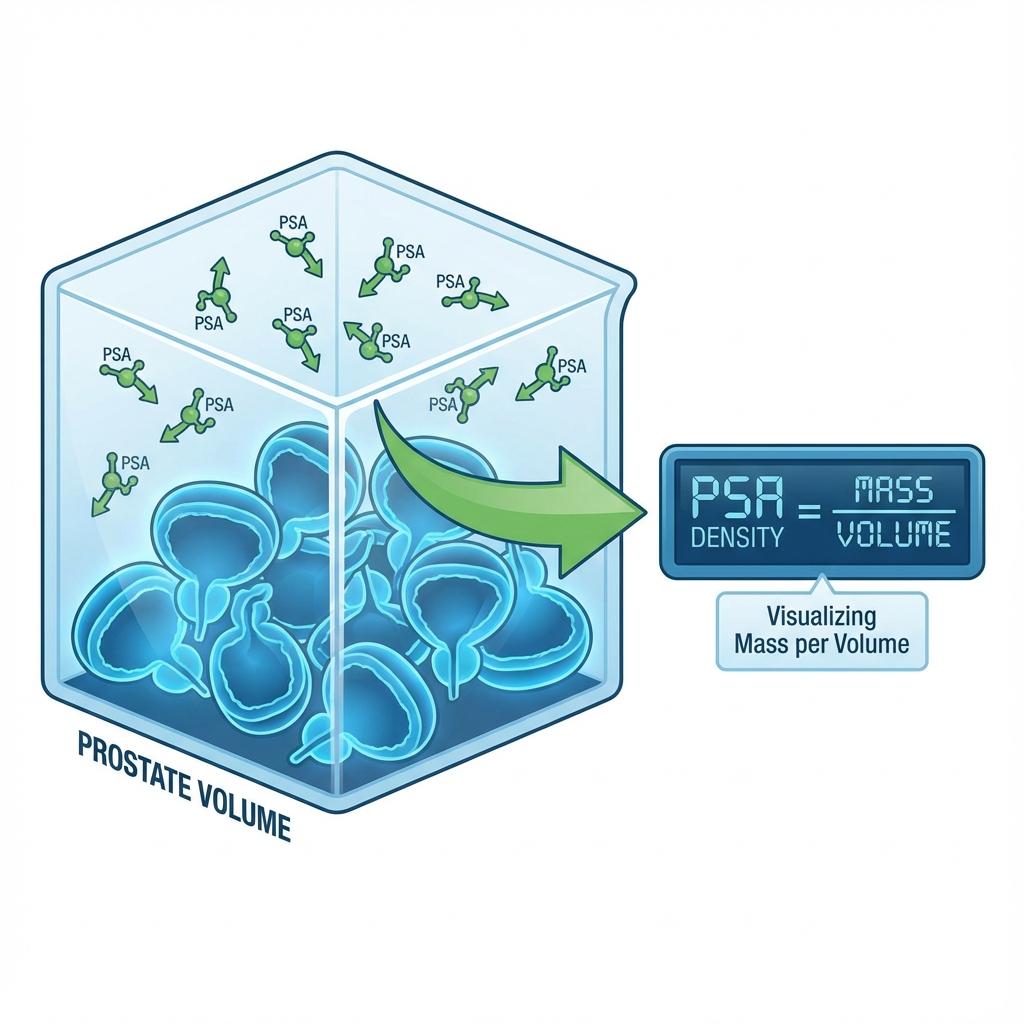
It seems like common sense: A bigger prostate should squeeze the urethra tighter, causing more urinary problems. Therefore, the bigger the prostate, the worse the symptoms.
In reality, urology is rarely that simple. The relationship between Prostate Volume and Lower Urinary Tract Symptoms (LUTS) is surprisingly weak. Men with massive prostates can urinate freely, while men with small, tight prostates can face total blockage. Why?
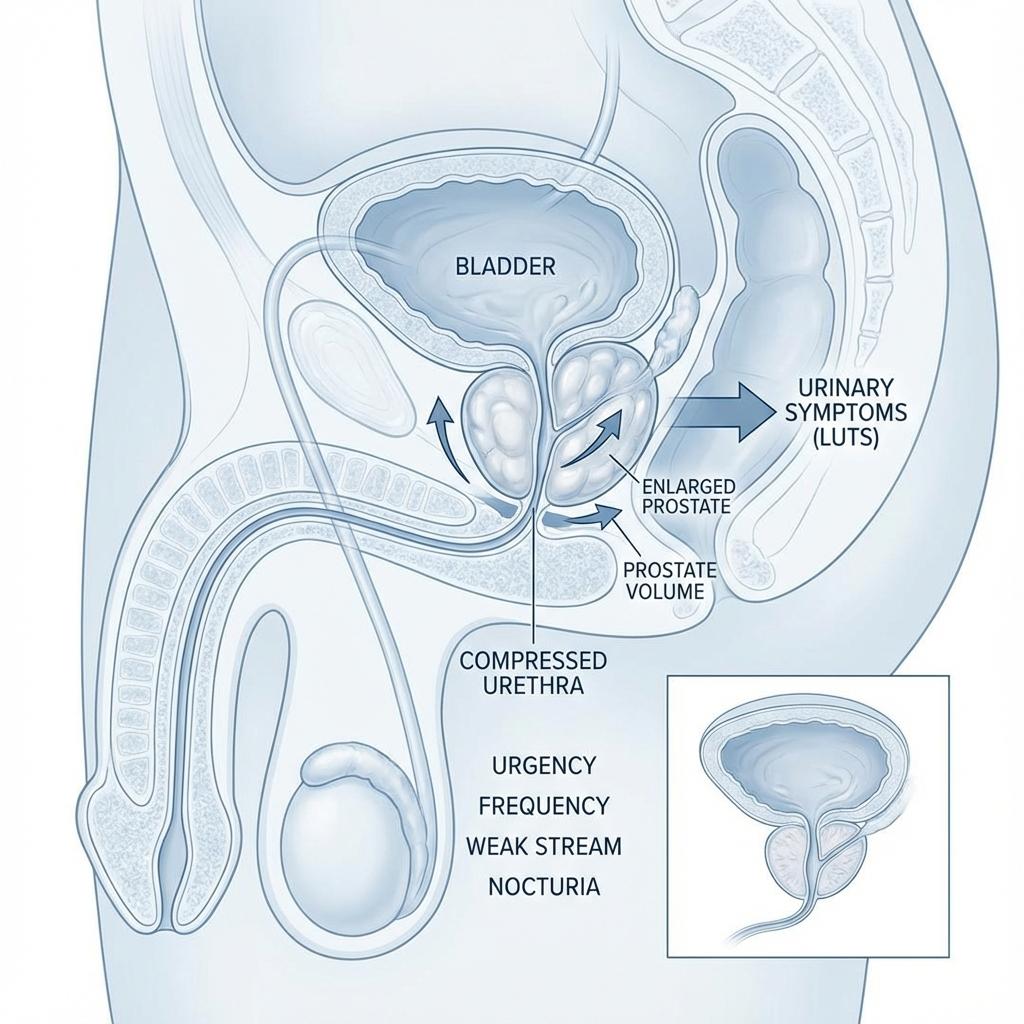
Understanding LUTS
LUTS is the medical term for the group of symptoms previously attributed solely to BPH. They are divided into two categories:
- Storage Symptoms (Irritative): Frequency, urgency, waking up at night (nocturia).
- Voiding Symptoms (Obstructive): Weak stream, hesitating to start, dribbling, incomplete emptying.
The Size vs. Obstruction Paradox
BPH growth is not uniform.
1. Direction of Growth
Imagine the prostate as a donut and the urethra as the hole.
- Outward Growth: If the prostate grows outward (away from the hole), it can get huge (e.g., 100cc) without squeezing the urethra much.
- Inward Growth: If it grows inward (intravesical protrusion), even a small amount of growth can form a "ball valve" that blocks urine flow completely.
This is why Shape matters more than Size for symptoms.
The Bladder Factor
The prostate is the obstruction, but the bladder is the engine.
A healthy bladder works like a strong muscle. If the prostate squeezes slightly, a strong bladder can just push harder to overcome it. You might not notice any change in your stream for years.
The Danger Zone: Over time, the bladder gets tired from pushing against a blockage. Its walls thicken (trabeculation), and eventually, it can burn out (detrusor underactivity). Once the bladder fails, removing the prostate won't fix the problem because the engine is broken.
Measuring Your Symptoms: The IPSS
Since volume doesn't predict symptoms well, doctors use a questionnaire called the International Prostate Symptom Score (IPSS).
It asks 7 questions about how you pee. Scores range from 0 to 35.
- 0-7: Mild (Watchful Waiting)
- 8-19: Moderate (Medication)
- 20-35: Severe (Surgery likely)
When Volume DOES Matter
While volume doesn't predict symptoms well, it perfectly predicts treatment success.
- Medications: 5-ARIs (Finasteride) only work on enlarged prostates (>40cc). They are useless for small glands.
- Surgery:
- Small (<30cc): A distinct procedure (Bladder Neck Incision) is better than TURP.
- Medium (30-80cc): TURP, UroLift, or Rezum work well.
- Large (>100cc): HoLEP or Simple Prostatectomy is required. TURP is dangerous here.
Conclusion
Do not obsess over the volume number on your ultrasound report if you feel fine. A 60cc prostate is not a "ticking time bomb." However, if you do have symptoms, knowing your volume is critical—not for diagnosis, but for choosing the right repair tool.
Need to calculate prostate volume?
Use our free medical-grade calculator to get instant results using the Ellipsoid or Bullet formula.