Your doctor has ordered a Transrectal Ultrasound (TRUS) of the prostate. The name alone can cause apprehension. What exactly happens? Is it painful? How do I prepare?
Fear of the unknown is often worse than the procedure itself. TRUS is a routine, safe, and quick examination that provides vital information about the size, shape, and health of your prostate. This guide walks you through every step of the process, from the night before to the drive home.
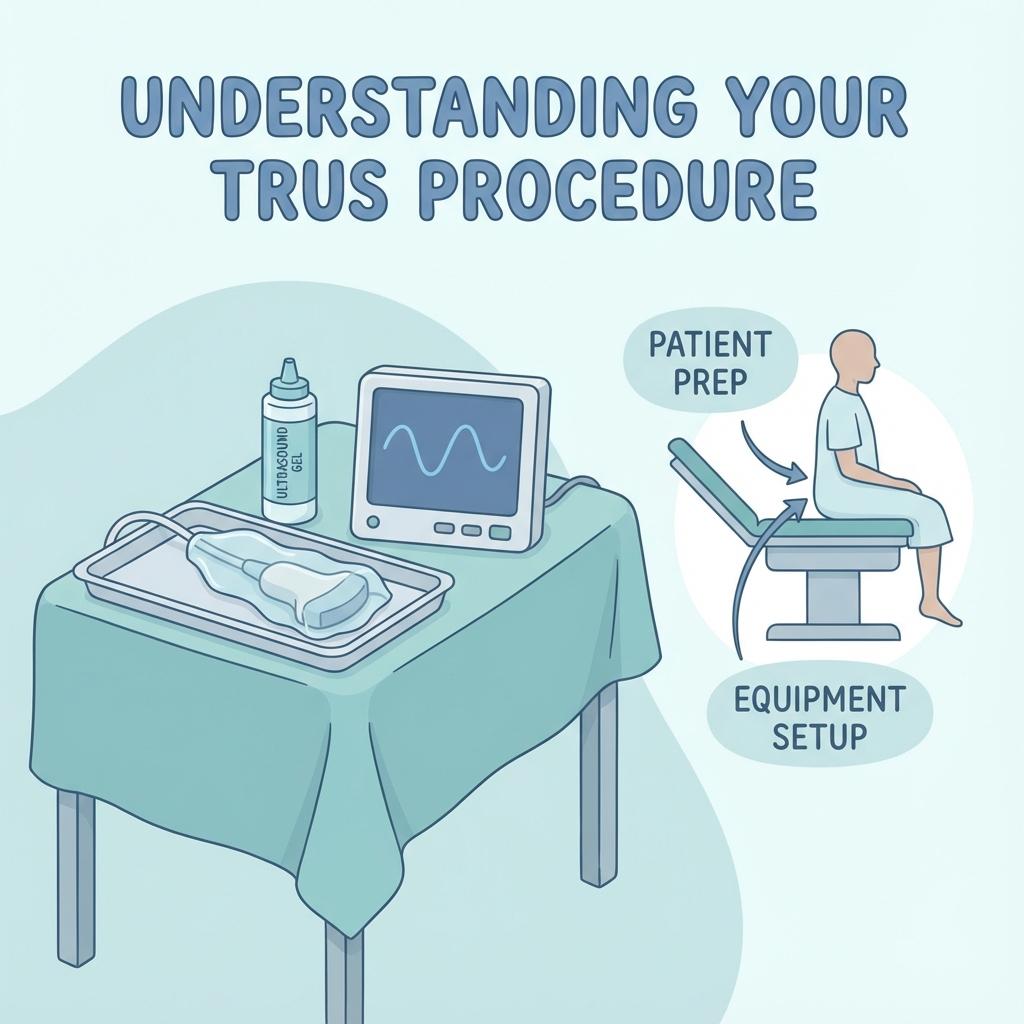
What is TRUS?
Transrectal Ultrasound involves using high-frequency sound waves to create an image of the prostate gland. Because the prostate sits directly in front of the rectum, placing an ultrasound probe in the rectum allows for a very close and clear view of the gland—much clearer than an ultrasound from the belly.
Why is it Done?
TRUS is rarely done as a screening tool for everyone (like a PSA test). It is usually ordered to investigate a specific issue:
- High PSA: To calculate PSA Density by measuring precise volume.
- Abnormal DRE: If the doctor felt a lump during a physical exam, TRUS helps visualize it.
- LUTS Symptoms: To check for BPH size in men having trouble urinating.
- Infertility: To check for blockages in the ejaculatory ducts.
- Biopsy Guidance: To guide the needle exactly to the prostate areas needed (if a biopsy is performed).
Preparation: Getting Ready
Preparation varies by clinic, but here is the standard protocol:
1. The Enema
Most clinics will ask you to use a fleet enema 1-2 hours before the appointment. This clears the rectum of stool, which gives the ultrasound probe a clear view and reduces the risk of infection if a biopsy is done. It is a simple, over-the-counter kit.
2. Medication
If only an ultrasound is being done (no biopsy), usually no antibiotics or painkillers are needed. If a biopsy is planned, you will likely take an antibiotic pill an hour before.
3. Clothing
Wear comfortable, loose-fitting clothes. You will be asked to undress from the waist down and wear a hospital gown.
The Procedure: Step-by-Step
The entire exam usually takes less than 15 minutes.
Step 1: Positioning
You will typically lie on your left side with your knees bent up towards your chest (the fetal position). This relaxes the pelvic floor muscles.
Step 2: The Digital Exam
The doctor will perform a quick Digital Rectal Exam (DRE) first to ensure the rectum is empty and to lubricate the area.
Step 3: Insertion
The ultrasound probe is about the width of a finger—slightly larger than a DRE finger but generally well-tolerated. It is covered in a protective sheath and plenty of lubricating gel. You will feel pressure, but it should not be sharp pain.
Tip: Take deep breaths and try to relax your anal sphincter. Tensing up makes it more uncomfortable.
Step 4: Imaging
The doctor will rotate the probe slightly to see different angles. You might hear "whooshing" sounds if they turn on the Doppler to listen to blood flow. They will take measurements: Length, Width, and Height.
What Does it Feel Like?
Most men report discomfort rather than pain.
- Pressure: A feeling of fullness in the rectum.
- Urge to Urinate: The prostate sits right under the bladder. As the probe presses on the prostate, you may feel a sudden strong urge to pee. This is normal and temporary.
Understanding the Results
The report will typically include:
1. Volume
Measured in cubic centimeters (cc) or milliliters (mL).
- Normal (Young Male): ~20 cc
- Mild Enlargement: 30 - 50 cc
- Significant Enlargement: > 50 cc
- Very Massive: > 100 cc
2. Echogenicity
This refers to how "bright" or "dark" the tissue looks.
- Isoechoic: Normal tissue.
- Hypoechoic (Dark spots): Can be cancer, but also can be inflammation or benign nodules.
- Hyperechoic (Bright spots): Often calcifications (prostatic stones), which are usually harmless.
After the Procedure
If no biopsy was performed, there is zero recovery time. You can drive yourself home and return to work immediately. You might feel a little sensitive for an hour, but that's it.
If a biopsy was performed, you may see some blood in your urine or stool for a few days, and in your semen for a few weeks (it may look rust-colored). This is normal.
Conclusion
A TRUS exam is a fundamental tool in urology. While the idea of it is unpleasant, the reality is quick and manageable. It provides the crucial data needed to calculate your PSA Density and guide your treatment path.
Need to calculate prostate volume?
Use our free medical-grade calculator to get instant results using the Ellipsoid or Bullet formula.