Your doctor says you have "moderate BPH symptoms"—but what exactly does that mean? The classification of Benign Prostatic Hyperplasia into mild, moderate, and severe categories guides treatment decisions and helps track disease progression. Understanding these levels empowers you to participate actively in your care.
The primary tool for categorizing BPH severity is the International Prostate Symptom Score (IPSS)—a validated 7-question survey that produces a score from 0 to 35. Let's explore what each severity level looks like in real life.
Mild BPH Symptoms (IPSS 0-7)
Men with mild BPH have urinary symptoms, but they're more of an annoyance than a significant life disruption.
What Daily Life Looks Like
- Getting up 0-1 times per night to urinate
- Occasional sense of incomplete bladder emptying
- Urinary stream is slightly weaker than years ago, but manageable
- Rarely need to plan activities around bathroom access
- No urgency accidents or close calls
Typical Patient Quote
Recommended Management
- Watchful Waiting: No active treatment needed in most cases
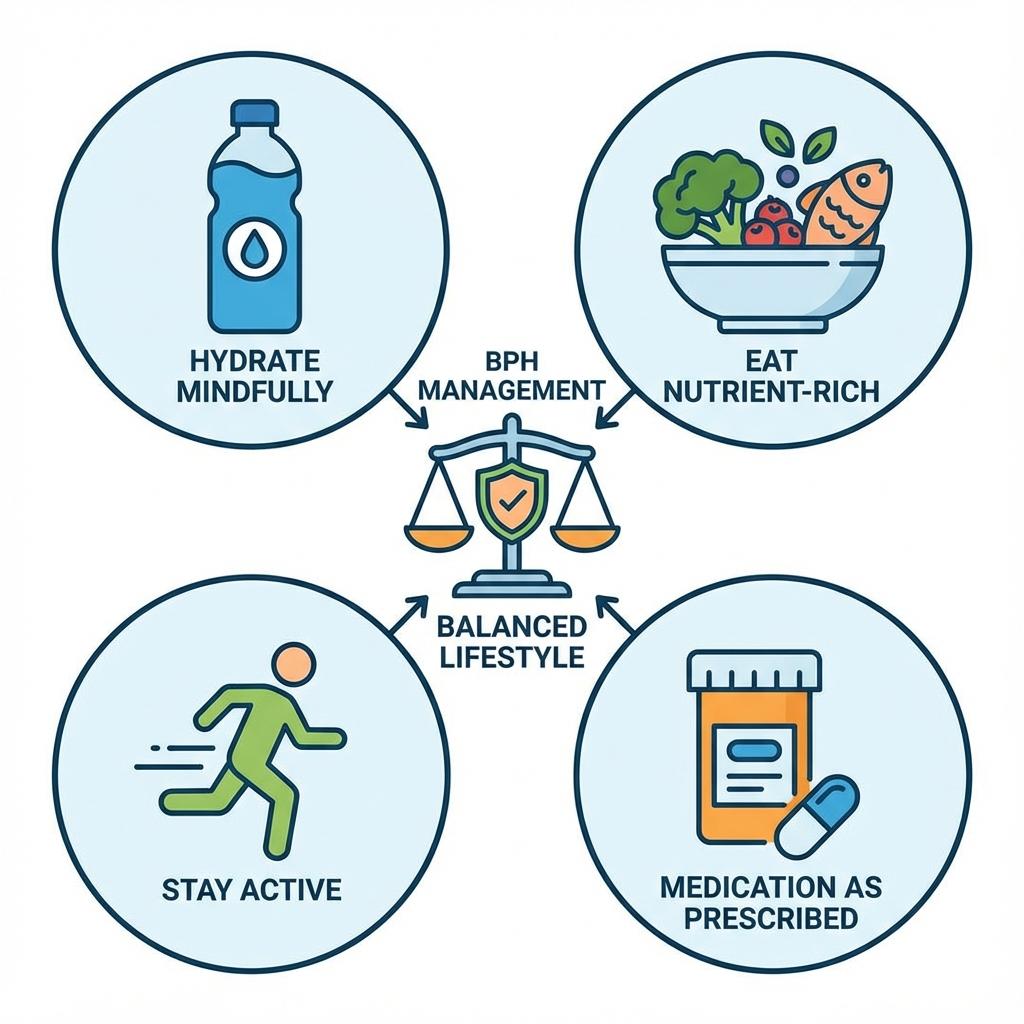
- Lifestyle Modifications:
- Reduce evening fluid intake
- Limit caffeine and alcohol
- Double voiding technique
- Timed voiding (scheduled bathroom trips)
- Annual Monitoring: Yearly IPSS and PSA checks
When to Reconsider
Mild symptoms may warrant treatment if:
- Quality of life impact is disproportionate to score
- Work or travel requirements make symptoms problematic
- Prostate volume is large (>40cc), predicting future progression
- PSA is elevated, warranting further investigation
Moderate BPH Symptoms (IPSS 8-19)
This is the most common category among men seeking urological care. Symptoms are noticeable and beginning to affect quality of life.
What Daily Life Looks Like
- Getting up 2-3 times per night to urinate
- Urinary stream noticeably weaker; may splatter or dribble
- Frequently feel like bladder isn't empty after voiding
- Sometimes have to wait for stream to start
- Occasional urgency; need to find bathroom quickly
- Plan seating (aisle seats on planes, near exits at events)
Typical Patient Quote
Recommended Management
Moderate symptoms typically warrant medical therapy:
- Alpha-Blockers (tamsulosin, alfuzosin, silodosin):
- Relax smooth muscle in prostate and bladder neck
- Work within days to weeks
- Side effects: dizziness, retrograde ejaculation
- 5-Alpha Reductase Inhibitors (finasteride, dutasteride):
- Shrink prostate over 6-12 months
- Best for prostates >30-40cc
- Side effects: sexual dysfunction in some men
- Combination Therapy: Both drug classes together for larger prostates
- PDE5 Inhibitors: Tadalafil 5mg daily (also treats erectile dysfunction)
Know Your Volume
Treatment selection depends partly on prostate size. Use our Prostate Volume Calculator to determine your gland size.
When to Consider Intervention
Men with moderate symptoms may prefer procedures over lifelong medication if:
- Medication side effects are intolerable
- They prefer a one-time solution
- Medications don't adequately control symptoms
- They're young and facing decades of medication
Options like UroLift, Rezum, and TURP may be appropriate. Learn more about size-based treatment options.
Severe BPH Symptoms (IPSS 20-35)
Severe symptoms significantly impair quality of life and often indicate need for active intervention.
What Daily Life Looks Like
- Getting up 4-5+ times per night to urinate
- Chronic fatigue from sleep disruption
- Very weak, dribbling stream; may take 1-2 minutes to void
- Strong urgency; may have accidents or close calls
- Need to strain to urinate
- Limiting social activities, travel, and hobbies
- Anxiety about bathroom accessibility
Typical Patient Quote
Potential Complications
Severe, untreated BPH can lead to:
- Acute Urinary Retention: Complete inability to urinate (medical emergency)
- Chronic Retention: Progressive bladder damage
- Recurrent UTIs: From incomplete emptying
- Bladder Stones: From stagnant urine
- Renal Insufficiency: Backpressure affecting kidneys
Recommended Management
Severe symptoms usually require more than medication:
- Surgical Options:
- TURP (gold standard)
- HoLEP (excellent for large prostates)
- GreenLight laser
- Aquablation
- Simple prostatectomy (for very large glands)
- Minimally Invasive Procedures:
- UroLift (if anatomy suitable)
- Rezum water vapor therapy
Progression Between Severity Levels
BPH is typically progressive, but the rate varies dramatically:
- Some men stay mildly symptomatic for decades
- Others progress from mild to severe in 5-10 years
- Risk factors for progression include large baseline prostate, high PSA, and age
Tracking Your Score
Regular IPSS monitoring (annually or with symptom changes) helps detect progression. Our IPSS Quiz lets you track scores over time.
The Role of Quality of Life
The IPSS includes a quality of life (QoL) question scored 0-6. This matters because:
- Two men with IPSS 15 may have very different bother levels
- Treatment is indicated more by bother than by score alone
- A "delighted" man with IPSS 12 may not need treatment
- A "terrible" man with IPSS 10 likely does
| QoL Score | Interpretation |
|---|---|
| 0 | Delighted |
| 1 | Pleased |
| 2 | Mostly Satisfied |
| 3 | Mixed |
| 4 | Mostly Dissatisfied |
| 5 | Unhappy |
| 6 | Terrible |
Key Takeaways
- ✓ Mild (0-7): Watchful waiting usually appropriate; lifestyle changes help
- ✓ Moderate (8-19): Medication therapy typically indicated; procedures if meds fail
- ✓ Severe (20-35): Active intervention often needed; complications possible
- ✓ Quality of life matters as much as the number—treatment is about bother, not just score
- ✓ Regular monitoring detects progression before complications occur
Not sure where you fall? Take our free IPSS Symptom Score Quiz now to find out your severity level and get personalized interpretation.
Need to calculate prostate volume?
Use our free medical-grade calculator to get instant results using the Ellipsoid or Bullet formula.