Your prostate volume isn't just a number on a medical report—it's a key factor that determines which treatments are available to you. Understanding how size influences your options empowers you to have informed discussions with your urologist.
From watchful waiting to robotic surgery, the spectrum of BPH treatments spans a wide range. But not every treatment works for every prostate. A procedure perfect for a 40cc gland might be impossible for a 120cc one. Let's explore exactly how volume shapes your treatment journey.
The Size-Treatment Relationship
Treatment selection in urology follows a principle: match the intervention to the anatomy. A smaller prostate may respond well to medication or office-based procedures. A very large prostate might require surgery that only specialized centers can perform.
Use our Prostate Volume Calculator to determine your gland size, then read below to understand what treatments align with your measurements.

Treatment Options by Prostate Size
Small Prostates (<30cc): Conservative Management
Men with prostates under 30cc and mild symptoms often don't need aggressive treatment. Options include:
- Watchful Waiting: Monitor symptoms without active intervention
- Lifestyle Modifications: Fluid management, avoiding caffeine/alcohol before bed
- Alpha-Blockers: Medications like tamsulosin relax bladder neck muscles
At this size, 5-alpha reductase inhibitors (finasteride, dutasteride) are generally not recommended—they work by shrinking tissue, and there's simply not much tissue to shrink.
Track your symptoms with our IPSS Score Quiz to know when escalation might be needed.
Medium Prostates (30-80cc): Most Treatment Options Available
This "sweet spot" range opens up the widest variety of treatment options. Most men with BPH fall into this category.
Medication Therapy
- Alpha-Blockers: Provide quick symptom relief (days to weeks)
- 5-Alpha Reductase Inhibitors: Now indicated; can shrink prostate 20-30% over 6-12 months
- Combination Therapy: Both drug classes together for enhanced benefit
- PDE5 Inhibitors: Tadalafil approved for BPH with or without ED
Minimally Invasive Procedures
This size range is ideal for newer office-based or outpatient procedures:
- UroLift: Mechanical clips hold tissue open. FDA approved for 30-80cc.
- Rezum: Water vapor (steam) therapy. FDA approved for 30-80cc with median lobe.
- Aquablation: Robotic waterjet ablation. Effective for 30-80cc.
Traditional Surgery
- TURP: The "gold standard" for decades. Best results for 30-80cc.
- Laser Procedures (GreenLight, ThuLEP): Vaporize or enucleate tissue.
Pro Tip: Document Your Baseline
Before starting any treatment, calculate your volume and PSA Density using our calculator. These baseline measurements help track treatment response.
Large Prostates (80-150cc): Specialized Approaches Needed
As prostates exceed 80cc, treatment options become more limited—but powerful tools still exist.
Medication Still Works
5-alpha reductase inhibitors become even more important at this size. Studies show larger prostates respond better to dutasteride/finasteride with shrinkage up to 25-30%.
Surgical Options
- HoLEP (Holmium Laser Enucleation): The champion of large prostates. Effective for any size, including 200cc+. Removes entire adenoma.
- Simple Prostatectomy: Open or robotic removal of adenoma. Reserved for very large glands but highly effective.
- ThuLEP/ThuVAP: Thulium laser options similar to HoLEP in capability.
What Doesn't Work Well
- UroLift/Rezum: Not FDA approved above 80cc
- Standard TURP: Risk increases with size; operation time becomes impractical
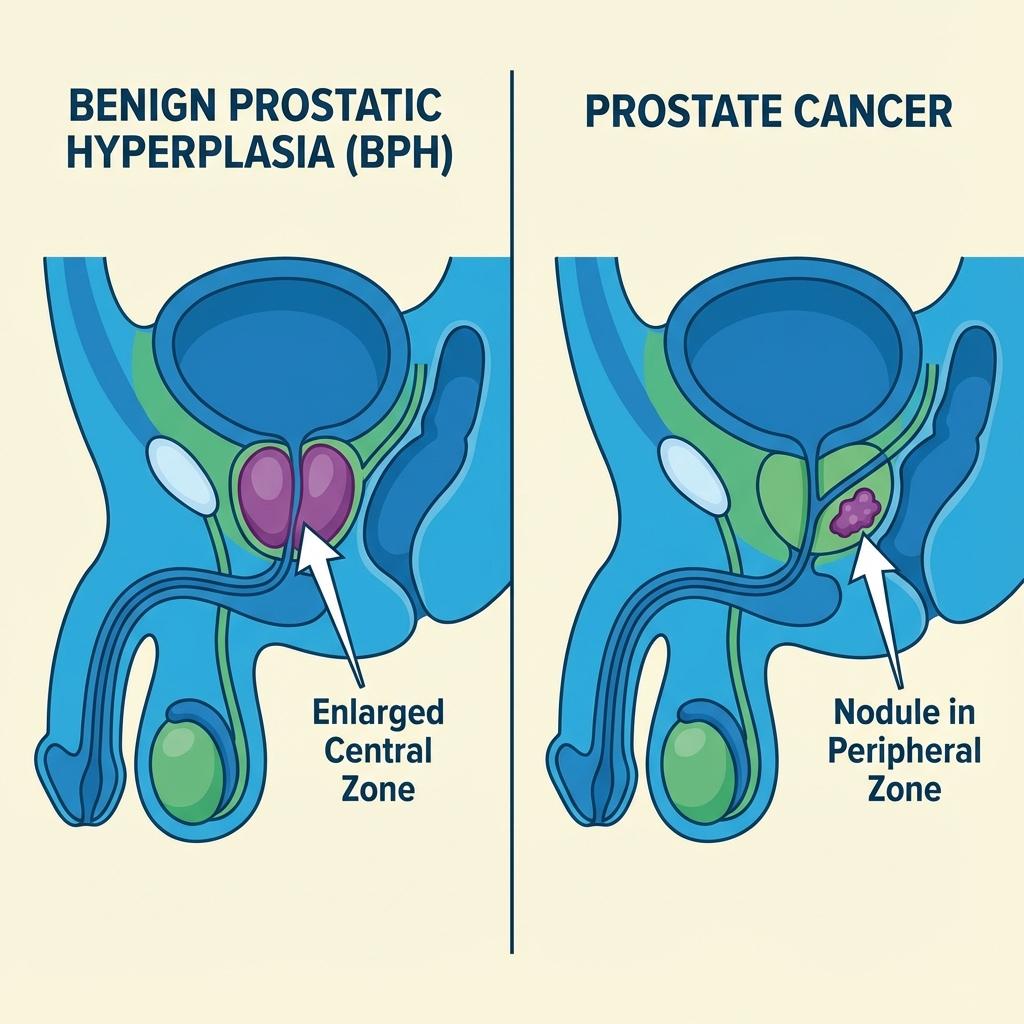
Very Large Prostates (>150cc): Tertiary Center Referral
Prostates exceeding 150cc (roughly the size of a grapefruit) require specialized expertise:
- HoLEP at Expert Centers: Experienced surgeons can enucleate 200-400cc glands
- Robotic Simple Prostatectomy: Removal through small incisions with robotic assistance
- Open Simple Prostatectomy: Traditional approach, still effective
At this size, blood loss during surgery becomes a significant consideration. Use our Prostate Weight Calculator to estimate glandular mass for surgical planning.
Treatment Selection Flowchart
Quick Decision Guide:
- Step 1: Calculate volume → Use Calculator
- Step 2: Assess symptoms → IPSS Quiz
- Step 3: Match size + symptoms to options below
| Volume | First-Line | If Medications Fail |
|---|---|---|
| <30cc | Alpha-blocker alone | TURP, Laser |
| 30-50cc | Combo therapy or UroLift/Rezum | TURP, GreenLight, HoLEP |
| 50-80cc | Combo therapy | TURP, HoLEP, Aquablation |
| 80-150cc | 5-ARI + Alpha-blocker | HoLEP, Simple Prostatectomy |
| >150cc | 5-ARI (may not be enough) | HoLEP, Robotic SP at expert center |
Beyond Volume: Other Factors
While volume is crucial, urologists also consider:
- Median Lobe: An enlarged middle lobe may affect procedure selection
- PSA Density: Rules out cancer before treatment (learn more)
- Bladder Function: Detrusor muscle health affects outcomes
- Patient Preference: Sexual side effects, recovery time, retreatment rates
- Comorbidities: Anticoagulation, anesthesia risk, etc.
What Happens If Size Changes?
An untreated prostate typically grows 1-2% per year. This means:
- A 40cc prostate may reach 50cc in 10-15 years
- Treatment options that work today may not be available later
- Early intervention often means more choices
Conversely, 5-alpha reductase inhibitors can shrink the prostate, potentially reopening minimally invasive options after 6-12 months of medication.
Questions to Ask Your Urologist
At Your Next Appointment:
- What is my exact prostate volume?
- Based on my size, what are all my treatment options?
- Which procedures do you personally perform?
- If my prostate is large, should I be referred to a specialist?
- How will my current size affect my options in 5-10 years?
Key Takeaways
- ✓ Prostate volume directly determines which treatments are available
- ✓ 30-80cc offers the widest range of options including minimally invasive
- ✓ Large prostates (>80cc) require specialized procedures like HoLEP
- ✓ 5-alpha reductase inhibitors can shrink prostates and expand options
- ✓ Know your volume before discussing treatment with your doctor
Don't know your prostate volume? Use our free Prostate Volume Calculator to get your measurement instantly using the same formulas trusted by urologists worldwide.
Need to calculate prostate volume?
Use our free medical-grade calculator to get instant results using the Ellipsoid or Bullet formula.