Your doctor mentions "PSA kinetics" or "PSA dynamics"—what do these terms mean? PSA kinetics refers to how your PSA changes over time, not just its absolute value. Understanding these concepts helps you participate meaningfully in your care.
What Are PSA Kinetics?
PSA kinetics encompasses three related measurements:
- PSA Velocity (PSAV): How much PSA rises per year
- PSA Doubling Time (PSADT): Time for PSA to double
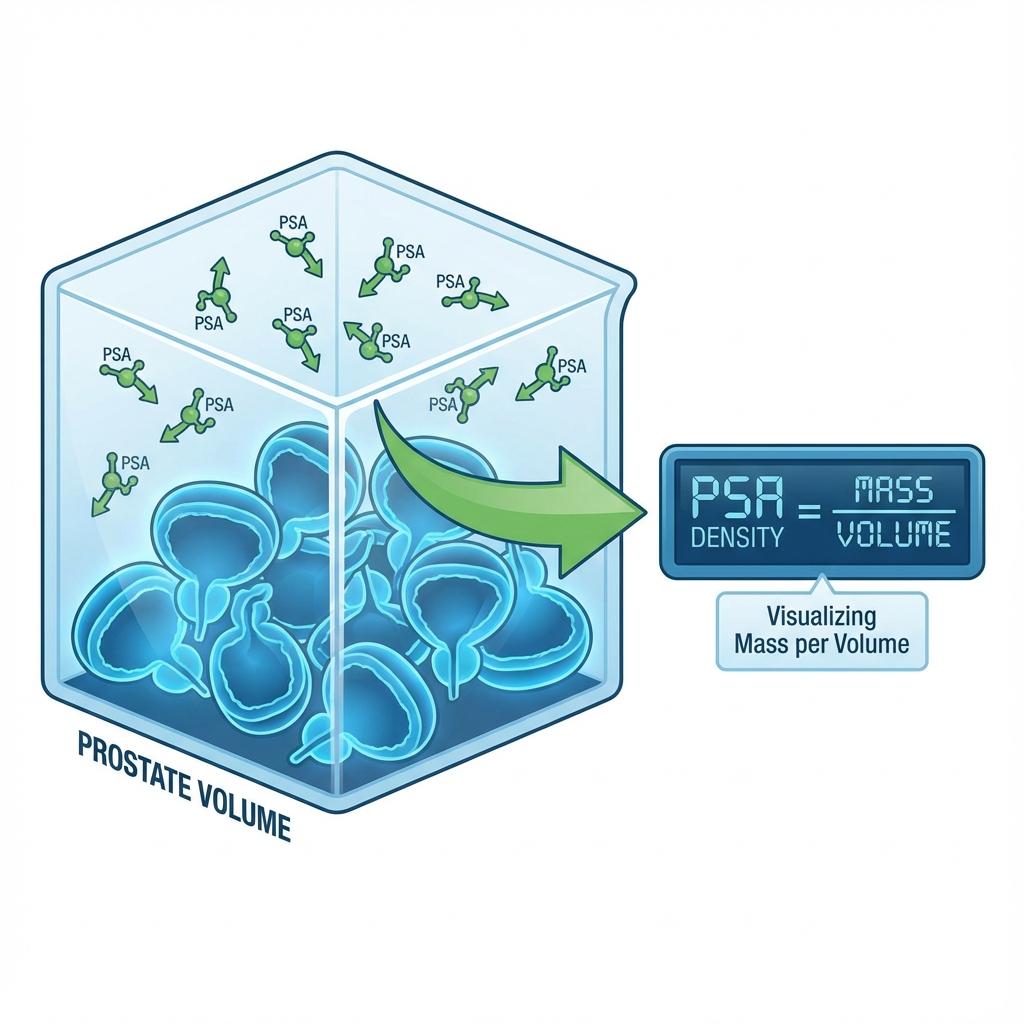
- PSA Density (PSAD): PSA relative to prostate size
Together, these provide a more complete picture than any single PSA value.
PSA Velocity (PSAV)
What It Measures
PSA Velocity measures the absolute change in PSA per year:
PSAV = (PSA₂ - PSA₁) / Time in years
What's Normal?
- Normal: <0.35 ng/mL/year (consistent with BPH)
- Borderline: 0.35-0.75 ng/mL/year
- Elevated: >0.75 ng/mL/year (increased cancer risk)
Limitations
PSAV assumes linear growth, but cancer typically grows exponentially. That's why PSADT is often more useful.
PSA Doubling Time (PSADT)
What It Measures
PSADT measures how long it takes for PSA to double. This reflects exponential growth patterns:
PSADT = (t × ln 2) / ln(PSA₂ / PSA₁)
Use our PSADT Calculator to compute this automatically.
Interpretation
- >24 months: Low risk, indolent
- 12-24 months: Intermediate
- <12 months: Elevated risk
- <6 months: High risk, aggressive
Why It Matters
PSADT better reflects tumor biology because cancer cells grow exponentially, not linearly. A short doubling time suggests rapidly dividing cells.
PSA Density (PSAD)
What It Measures
PSA Density adjusts PSA for prostate size:
PSAD = PSA ÷ Prostate Volume
Calculate yours with our Prostate Volume Calculator.
Why It Matters
Larger prostates produce more PSA even without cancer. A PSA of 8 means something different in a 25cc prostate versus an 80cc prostate:
- 8 ÷ 25 = 0.32 (concerning)
- 8 ÷ 80 = 0.10 (likely benign)
Thresholds
- <0.10: Low cancer risk
- 0.10-0.15: Borderline
- >0.15: Elevated cancer risk
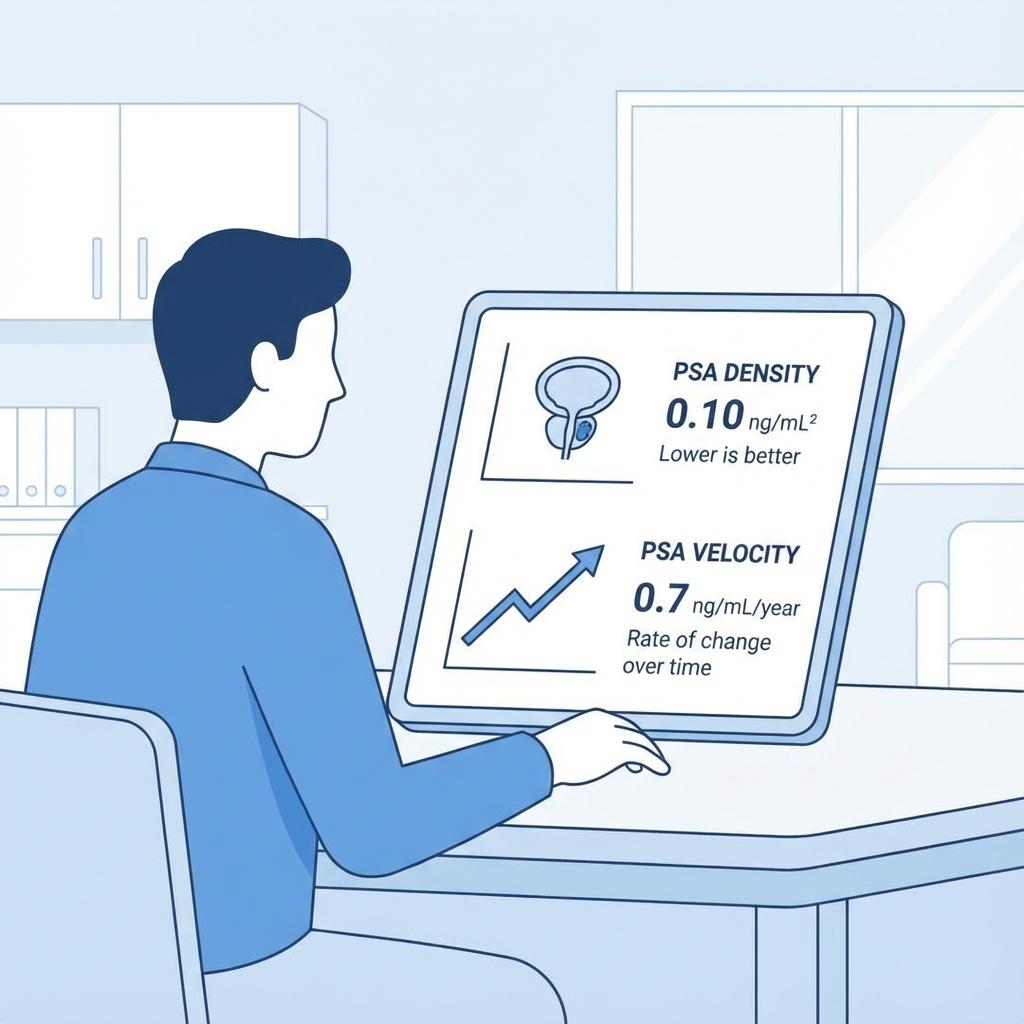
How They Work Together
Consider this example:
Patient: 62-year-old man
Current PSA: 6.5 ng/mL
PSA 2 years ago: 5.0 ng/mL
Prostate volume: 55cc
Analysis:
- PSAV: (6.5-5.0)/2 = 0.75 ng/mL/year (borderline elevated)
- PSADT: ~5 years (reassuring)
- PSAD: 6.5/55 = 0.12 (borderline)
Conclusion: Despite elevated PSA, kinetics suggest BPH more likely than cancer. Continued monitoring reasonable; MRI might be considered.
Common Questions
Which metric is most important?
Context determines importance:
- Pre-diagnosis: PSA Density often most informative
- Active surveillance: PSADT is key trigger
- Post-treatment: PSADT predicts recurrence behavior
How many PSA values do I need?
For reliable kinetics:
- Minimum: 2 values for simple calculation
- Ideal: 3+ values spanning 6-12+ months
- Same laboratory for all measurements
Can medications affect kinetics?
Yes:
- 5-ARIs (finasteride, dutasteride): Cut PSA in half; must double reported value
- Testosterone therapy: Can increase PSA
Tracking Your PSA Kinetics
- Keep a log of all PSA values with dates
- Note the laboratory (different assays vary)
- Calculate kinetics between appointments using our PSADT Calculator
- Know your prostate volume for density calculations
- Bring your tracking to doctor visits
Key Takeaways
- ✓ PSA kinetics = velocity + doubling time + density together
- ✓ PSAV measures absolute yearly change
- ✓ PSADT measures time to double (reflects exponential growth)
- ✓ PSAD adjusts for prostate size
- ✓ Combined, these provide better risk assessment than single PSA values
Calculate your PSA kinetics with our free PSADT Calculator and Volume Calculator.
Need to calculate prostate volume?
Use our free medical-grade calculator to get instant results using the Ellipsoid or Bullet formula.