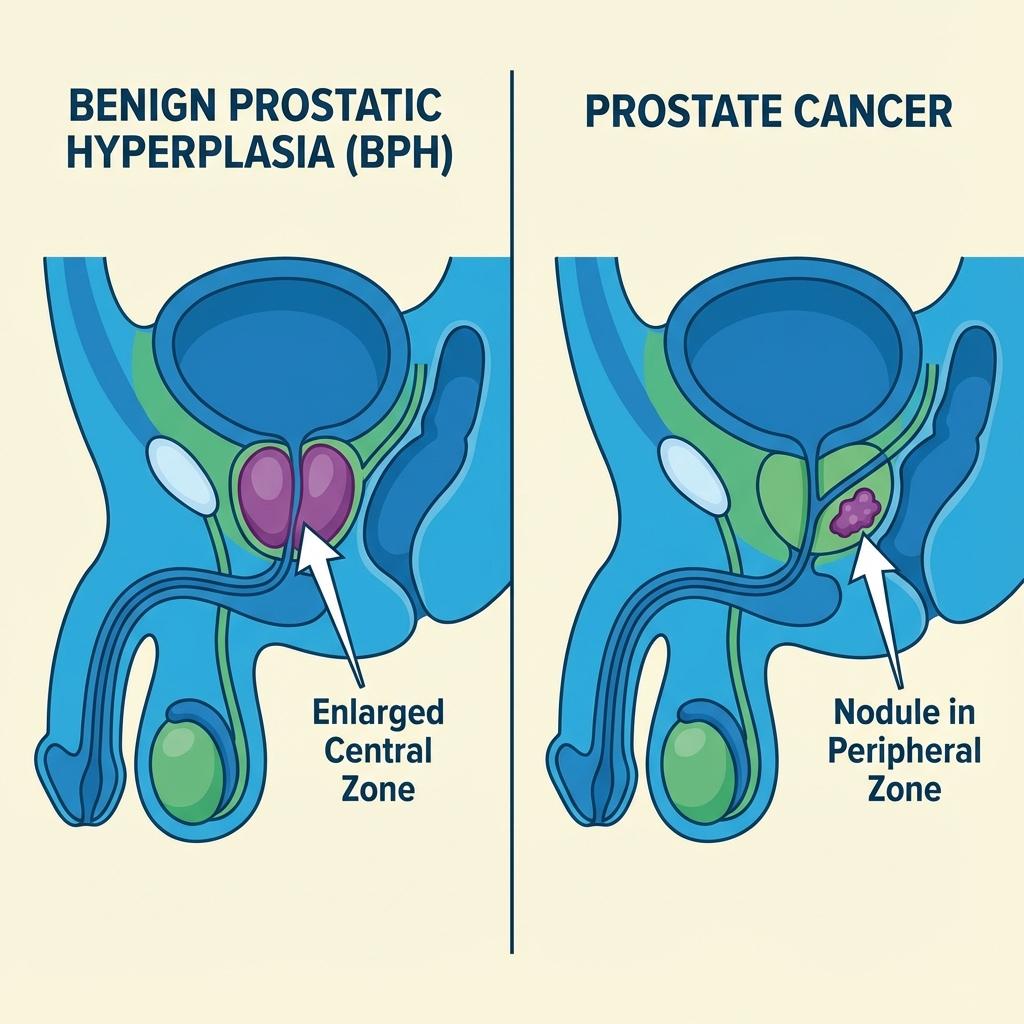
Unlike most organs in the human body, the prostate has a unique quirk: it never stops growing. The liver, heart, and kidneys reach their adult size and stay there. The prostate, however, has a second growth spurt in mid-life that continues until death.
Is your prostate "thick" for your age? Or is it normal? Understanding the natural growth curve is essential for interpreting your PSA Density and health risks.
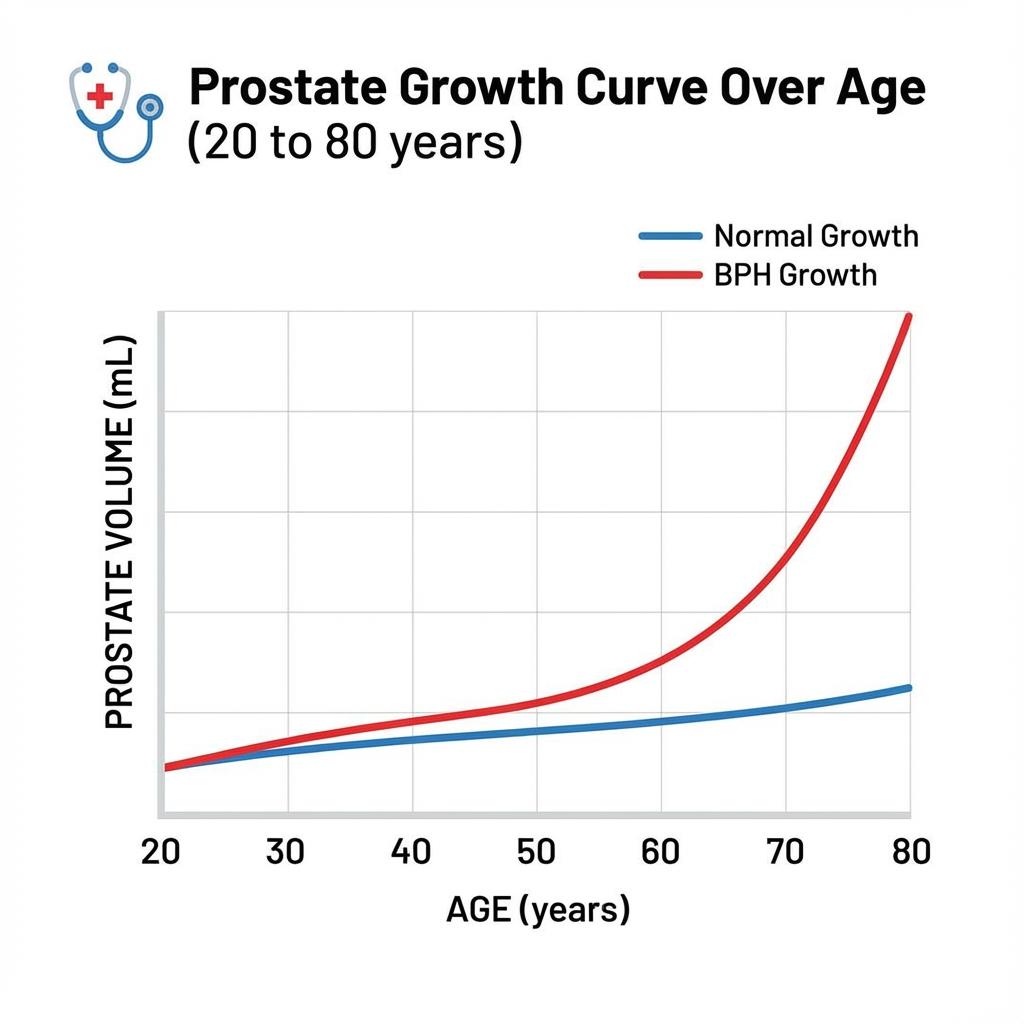
The Two Growth Spurts
Phase 1: Puberty
At birth, the prostate is the size of a pea. It stays dormant until puberty. During teenage years, testosterone levels surge, causing the prostate to grow rapidly, reaching its adult "normal" size of about 20 cc (roughly a walnut) by age 20.
It remains stable at this size for about two decades (ages 20-40).
Phase 2: The BPH Phase (Age 40+)
Around age 40, for reasons still not fully understood (likely related to changes in hormone ratios and localized DHT), the cells in the transition zone begin to multiply. This is the start of Benign Prostatic Hyperplasia (BPH).
The Growth Rate: On average, the prostate grows by about 1.6% to 2.5% per year after age 40.
Average Prostate Volume by Age Chart
While "normal" is 20-30cc, the "average" (what we actually see in the population) is higher because BPH is so common.
| Age Range | Average Volume (cc) | PSA Reference (ng/mL) |
|---|---|---|
| 40 - 49 | 20 - 30 cc | 0 - 2.5 |
| 50 - 59 | 30 - 40 cc | 0 - 3.5 |
| 60 - 69 | 40 - 55 cc | 0 - 4.5 |
| 70 - 79 | 50 - 70 cc | 0 - 6.5 |
| 80+ | > 60 cc | Age Adjusted |
When is Growth a Problem?
Remember: Size alone is not a disease.
A man can have an 80cc prostate at age 60 and have zero symptoms if the growth is outward. Conversely, a 30cc prostate can cause severe blockage if a small nodule presses directly on the urethra (the "median lobe").
However, rapid growth is a concern. If your prostate doubles in size in 2 years, that is unusual and warrants investigation, although BPH is still the most likely cause.
Conclusion
If your ultrasound shows your prostate is "enlarged" (e.g., 40cc at age 55), do not panic. You are statistically average. Prostate growth is a normal part of male aging, much like graying hair. The key is monitoring whether that growth is causing symptoms or elevating your PSA density into the danger zone.
Need to calculate prostate volume?
Use our free medical-grade calculator to get instant results using the Ellipsoid or Bullet formula.