When you sit in the urologist's office, your IPSS score is one of the first things they consider. This 7-question survey doesn't just measure symptoms—it helps determine whether you need watchful waiting, medication, or surgical intervention. Understanding this decision-making process helps you partner with your doctor in choosing the right treatment.
Calculate your score now with our IPSS Quiz, then use this guide to understand what treatment recommendations typically align with your results.
The IPSS-Treatment Algorithm
Major urological associations, including the American Urological Association (AUA) and European Association of Urology (EAU), use IPSS score to stratify treatment approaches:
| IPSS | Severity | Initial Approach | If Initial Fails |
|---|---|---|---|
| 0-7 | Mild | Watchful waiting + lifestyle | Add alpha-blocker |
| 8-19 | Moderate | Medical therapy | Procedures/surgery |
| 20-35 | Severe | Medical or surgical | Surgery strongly considered |
Mild Symptoms (IPSS 0-7): Watchful Waiting
For men with mild symptoms, the first-line approach is watchful waiting (also called "active surveillance" for BPH).
What Watchful Waiting Involves
- Annual IPSS assessment to track changes
- Annual PSA and optional prostate volume check
- Lifestyle modifications (see below)
- No medications unless symptoms worsen
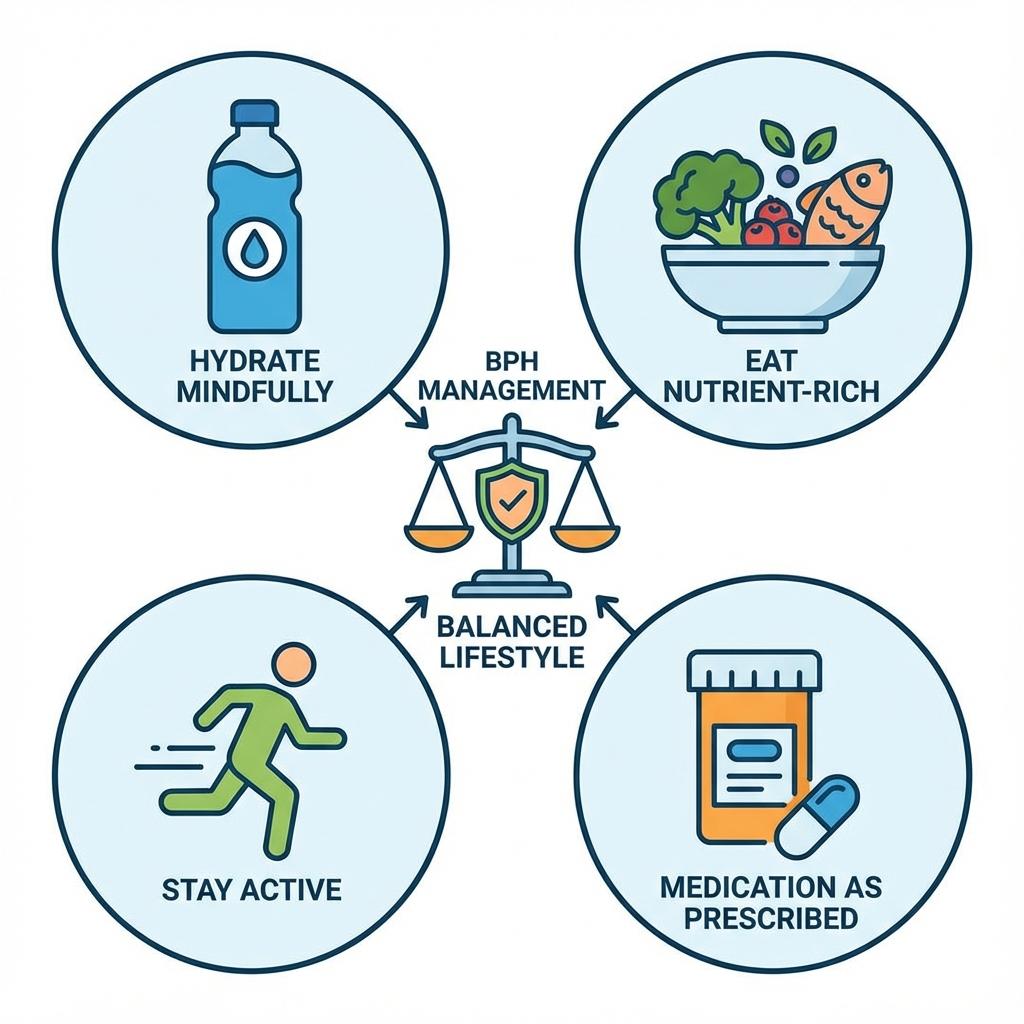
Lifestyle Modifications
- Fluid Management: Reduce intake after 6 PM
- Bladder Training: Scheduled voiding every 3-4 hours
- Double Voiding: Urinate, wait 30 seconds, try again
- Limit Irritants: Caffeine, alcohol, artificial sweeteners
- Medications Review: Some drugs worsen symptoms (antihistamines, decongestants)
When to Escalate
Even with mild IPSS, treatment may be considered if:
- Quality of life is significantly affected
- Prostate volume is large (>40cc), predicting progression
- PSA is rising faster than expected
Moderate Symptoms (IPSS 8-19): Medical Therapy
This is where medication becomes the standard first approach.
Alpha-Blockers (First-Line)
Alpha-blockers relax smooth muscle in the prostate and bladder neck:
- Medications: Tamsulosin, alfuzosin, silodosin, doxazosin, terazosin
- Onset: Days to weeks
- Efficacy: IPSS improvement of 4-6 points on average
- Side Effects: Dizziness, orthostatic hypotension, retrograde ejaculation (especially silodosin)
5-Alpha Reductase Inhibitors (5-ARIs)
These medications shrink the prostate by blocking testosterone conversion:
- Medications: Finasteride, dutasteride
- Best For: Prostates >30-40cc (check with our Volume Calculator)
- Onset: 6-12 months for full effect
- Efficacy: IPSS improvement of 3-4 points; reduces prostate size 20-30%
- Side Effects: Decreased libido, erectile dysfunction, ejaculatory issues (5-10% of men)
Combination Therapy
For men with larger prostates and moderate-to-severe symptoms, combining both drug classes provides superior outcomes:
- Greater symptom improvement than either alone
- Reduces risk of urinary retention and need for surgery
- Examples: tamsulosin + dutasteride (sold as Jalyn)
PDE5 Inhibitors: A Third Option
Tadalafil 5mg daily is FDA-approved for BPH with or without erectile dysfunction. It improves IPSS by 2-3 points and offers the added benefit of treating ED.
Severe Symptoms (IPSS 20-35): Intervention Often Needed
Men with severe symptoms often require more than medication. However, a trial of medical therapy is still typically offered first.
When Surgery is Indicated
- Medications fail to adequately control symptoms
- Side effects are intolerable
- Complications develop (retention, infections, stones)
- Patient prefers definitive treatment over lifelong medication
Surgical Options by IPSS Response
| Procedure | Expected IPSS Improvement | Best For |
|---|---|---|
| TURP | 70-80% reduction | 30-80cc prostates |
| HoLEP | 70-80% reduction | Any size, especially >80cc |
| UroLift | 40-50% reduction | 30-80cc, no median lobe |
| Rezum | 50-60% reduction | 30-80cc |
| GreenLight | 60-70% reduction | Most sizes |
Beyond the IPSS: Other Factors
While IPSS is crucial, treatment decisions also consider:
- Prostate Volume: Determines medication suitability and surgical approach (calculate yours)
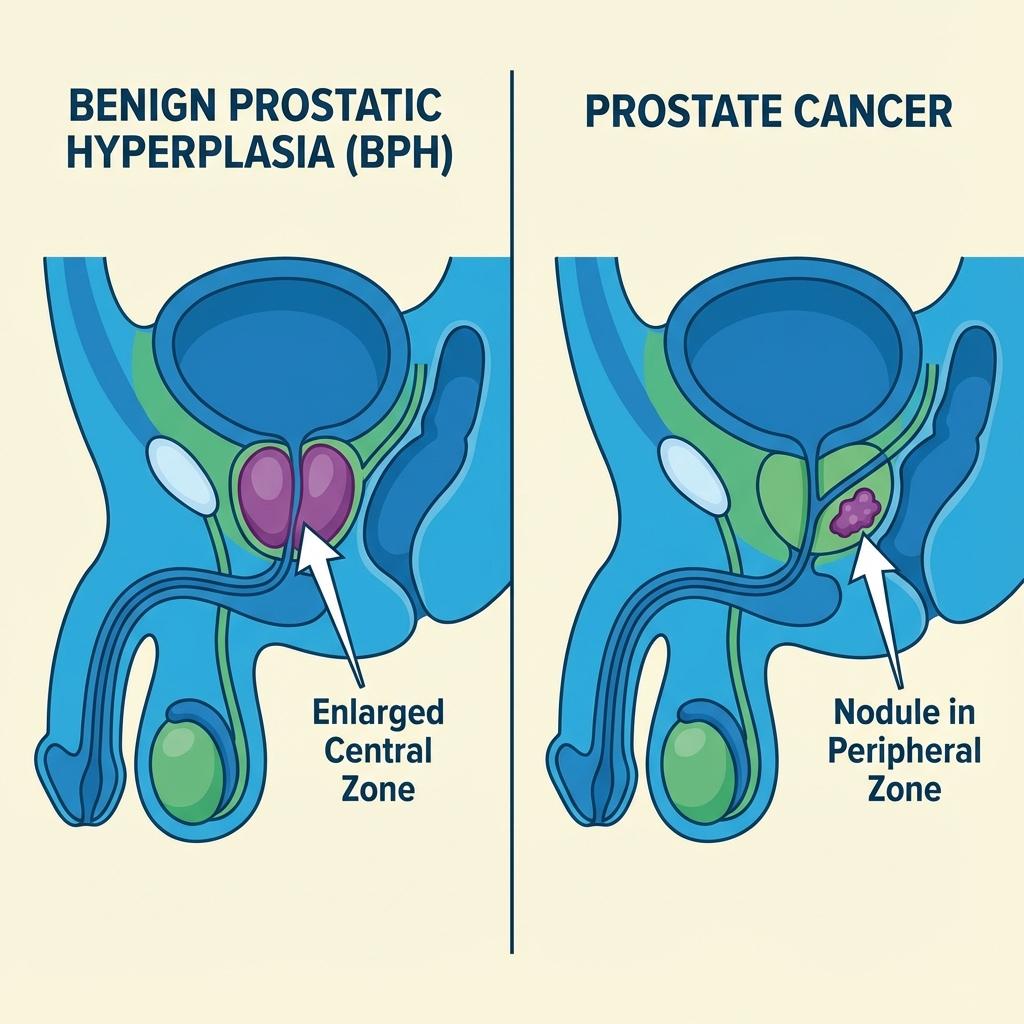
- PSA Density: Rules out cancer before treatment
- Post-Void Residual: High PVR (>100-200mL) may favor intervention
- Quality of Life Score: High bother with low IPSS may still warrant treatment
- Complications: Retention, stones, or infections require intervention regardless of IPSS
Tracking Treatment Response
After starting any treatment, repeat IPSS at:
- 4-6 weeks: For alpha-blockers
- 6 months: For 5-ARIs
- 3 months: After procedures
What to Expect
- Medications: 3-6 point IPSS improvement is typical "success"
- Minimally Invasive: 6-10 point improvement expected
- TURP/HoLEP: 15-20+ point improvement common in severe cases
Key Takeaways
- ✓ IPSS 0-7: Watchful waiting with lifestyle changes first
- ✓ IPSS 8-19: Medical therapy (alpha-blockers ± 5-ARIs)
- ✓ IPSS 20-35: Medical trial, then surgical options if needed
- ✓ Volume matters: larger prostates respond better to 5-ARIs
- ✓ Track your IPSS over time to measure treatment success
Ready to calculate your score and discuss treatment options? Take our free IPSS Symptom Score Quiz now.
Need to calculate prostate volume?
Use our free medical-grade calculator to get instant results using the Ellipsoid or Bullet formula.